I need to start with a confession – I am not a birdwatcher.
Whilst I do enjoy the great outdoors and love watching nature do its thing, nobody would describe me as a twitcher and I still don’t know if it is a cormorant or a shag that I often see fishing in the bay. My father was, however, a part time orthinologist and it was mainly in Newport that I would find him pouring over his little bird book. We have a lovely photo of one of our sons, aged around 4, sitting with my father on the bench at Brig-y-Don on the Parrog reading that bird book together. It makes me smile every day and I will also confess to having a soft spot for birdwatching in Newport, even if I don’t know what most of the birds actually are!
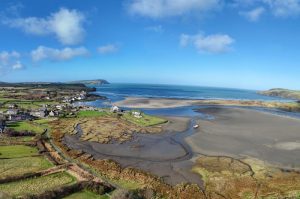
There can be no doub that Newport, and the wider Pembrokeshire area, is a gem for birdwatchers. The stunning mosaic of estuaries, reedbeds, mudflats, heathland and cliff-lined coast means there’s almost always something to see.
With the help of an anonymous friend, I therefore thought that it would be helpful to prepare a short summary of what you can expect to see through the binoculars, month by month, in the Newport area:
January
Winter in Newport is quieter but rewarding. Look out over the Nevern Estuary or Newport’s marshy fringes for wigeon, teal and other wildfowl. In colder spells, flocks of redwings and fieldfares may be spotted on hedgerows before sunset. Shorelines and mudflats attract oystercatchers and lapwings, and raptors such as buzzards patrol the skies.
February
Cold weather still draws winter wildfowl, but February can also see early arrivals of passing migrants on milder days. Shorebirds like greenshank and whimbrel begin trickling through on southerly winds, often feeding on estuary mudflats near the iron bridge. Keep binoculars trained on the river edge at dawn and dusk.
March
Spring migration begins in earnest. Chiffchaffs, whitethroats and warblers start arriving, filling hedgerows with song. Along the coast and estuary margins look for early sandpipers and curlew. Offshore, sea watchers might catch fleeting views of passing auks or terns out to sea.
April
April is a highlight for spring birding. Warblers and flycatchers move north, rarities such as woodchat shrike or melodious warbler have been recorded around Newport at this time, while local breeding species like kingfisher and greenshank are busy establishing territories. My personal kingfisher hotspot is Nevern, near The Trewern Arms, where you often see the birds flying under the bridge.
May
This is arguably the best month for birdwatching. Alongside resident songbirds, the coast and estuary see peak passage of migrants. The Teifi Estuary, within half an hour’s reach, adds reed Warblers and Sedge Warblers to your patch list. Offshore, seabirds such as guillemots and razorbills are featuring along Pembrokeshire’s cliffs as breeding season swings into full effect.
June
Summer breeding birds settle in. Look and listen for reed warbler, sedge warbler and Cetti’s warbler in reed beds and riverside scrub. Estuaries are busy with oystercatcher and redshank families, and woodland edges near Newport may host swifts, swallows and martins feeding young.
July
The warmer months are great for regular summer residents and fledged youngsters: yellowhammers, crossbills, siskins and garden warblers can all be seen in inland woodland and hedgerows. Shorelines remain active with mixed wader groups resting on shifting tides.
August
Passage migration resumes, with Scandinavian and Arctic waders heading south. Small flocks of sandpipers and plovers stop to refuel along the coast and estuaries. Inland, swifts and swallows gather into feeding flocks ahead of their long journey.
September
Early autumn sees strong movement. Estuaries and mudflats attract significant numbers of greenshank, godwits and curlews. Shorebirds often group on sandbanks at low tide, while overhead, hirundines and warblers continue their southern migration.
October
This is prime migratory season for many species. Coastal headlands within Pembrokeshire, such as Strumble Head, can offer spectacle as seabirds and migrants, pushed by weather systems, pass by. Inland mudflats and estuaries remain busy with waders and wildfowl.
November
Winter migrants arrive, and the ebb and flow of estuary tides draw birds to feeding grounds. Starlings form early murmurations over reed beds, and you’ll see large numbers of teal, wigeon and pintail gathering in shallow waters.
December
Winter is in full swing and the Newport area is ideal for low-tide birdwatching. Dippers and water rails peek from reedy margins, and flocks of shovelers and mallards feed along the lower reaches of the Nevern. Quiet woodland and shelter belts often host resident tits and finches.
Summary
Whether you’re armed with binoculars or just enjoying a walk by the estuary, Newport offers birdwatching opportunities across the whole year. You know where to stay if you want to come and see it for yourself 🙂