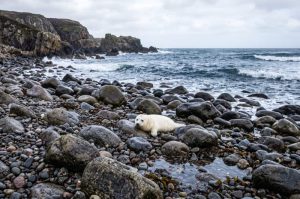
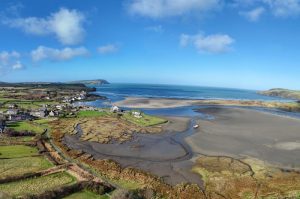
Newport is blessed with a wide range of wildlife that changes as you move from season to season. Spring brings wildflowers and nesting birds, summer is perfect for spotting dolphins and porpoises offshore, but autumn has one particularly special arrival: grey seal pups.
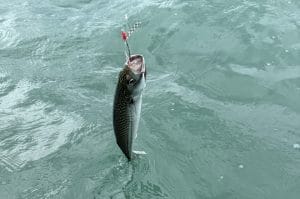
I don’t know why, but I have always had a soft spot for seals and we are lucky to see them a lot in Newport. It is normally out on the boat, where they are a frequent visitors. I expect they are hoping for some fish – little do they know that we are terrible at fishing 🙂 This is the time of year, however, when you are much more likely to see them on the beaches.
The Pembrokeshire coast is an important breeding area for Atlantic grey seals, and if you are here during late summer or autumn, there is a good chance that you may spot one of the distinctive white pups tucked away on a beach or in a secluded cove.
When is seal pup season in Pembrokeshire?
Seal pupping season in Pembrokeshire generally runs from late August through to December, although September and October are particularly good months for sightings.
The timing varies slightly from year to year and between different parts of the coast. Pups are born on quiet beaches, rocky coves and in caves where their mothers can come ashore to feed them.
For the first few weeks of their lives, grey seal pups have a thick, creamy-white coat. They grow incredibly quickly before shedding this fluffy coat and developing the darker, waterproof fur of an adult seal.
I have written before about why Autumn is one of our favourite times to visit the area. The summer crowds have disappeared, the landscape is beginning to change colour and there is always the possibility of looking down into a quiet cove and seeing a white seal pup below.
Where are the best places to see seal pups near Newport?
Pretty much anywhere along the Pembrokeshire Coast Path!
Heading north from Newport towards Ceibwr Bay and Cemaes Head takes you through particularly good seal country. There are numerous small beaches, caves and inaccessible coves below the cliffs, providing exactly the sort of sheltered locations that female seals look for when giving birth.
The coastline around Cemaes Head is particularly well known for its grey seals. Rather than trying to reach the beaches themselves, stay on the Coast Path and look down into the coves from a safe distance. A pair of binoculars can be very useful.
Ceibwr Bay is another beautiful place to explore and makes a good destination for a coastal walk from the Newport direction. Further south, Strumble Head is also regarded as one of Pembrokeshire’s best places for seal watching, with pups visible on some of the pebble beaches during autumn.
More generally, keep your eyes on the small, quiet coves as you walk the coast. A splash of white against dark rocks or pebbles is often the first sign that a pup is there.
A seal pup on its own isn’t necessarily abandoned
Finding a young seal apparently alone on a beach can look alarming, but it does not necessarily mean that anything is wrong.
Mother seals regularly leave their pups safely on land while they head out to sea to feed. They then return to nurse them, which will happen several times a day, although we have seen pups stranded on the beach at Newport Sands until the tide comes back in. It is a bit concerning at first, but you will often see the mother patrolling the surf keeping an eye on the pup.
It is therefore very important not to approach a pup simply because its mother isn’t visible. Fingers crossed, all is well.
Give them plenty of space
As tempting as it might be to get closer for a photograph, seal pups should always be watched from a generous distance.
Never touch a pup, feed it or attempt to encourage it back into the sea. Resting on the land is entirely normal behaviour and we should let them rest in peace.
Dogs and seal pups are not a good combination as even the best behaved dogs will likely frighten the pup. If you see seals or pups, keep your dog on a lead and give the animals a very wide berth.
What should you do if you think a seal pup is in trouble?
The first thing to do is observe from a distance.
As explained above, being alone is not, by itself, a reason to intervene. Nor should you assume that a seal needs help simply because it is lying still on a beach. It is likely to be chiling out enjoying the views whilst its mother hunts for food.
If a pup appears obviously injured, entangled, extremely weak or in genuine distress, it is worth getting in touch with Welsh Marine Life Rescue. It is a lovely organisation and they offer some excellent information on their website. Most importantly, keep other people and dogs away while you seek advice.
One of the highlights of autumn in Newport
We are massive fans of Autumn in Newport, but the seal pups add a little magic to what is already a beautiful place to be.
We love hearing about the wildlife that guests have seen and the seal pups are always fan favourites.
If you are lucky enough to find a fluffy white pup looking back at you, enjoy the moment, take your photographs from a distance and then leave it in peace. Its mum is probably on the way back with lunch 🙂